




CUSTOMER COMPLAINTS
We are sorry if we have caused any inconvenience to you. Please fill up the form below with your details. Our customer support staff will make sure we address your issue at the earliest.
Modern uPVC windows have become a popular option for homeowners looking for better insulation, low maintenance, durability, and contemporary designs. But upgrading every old window is not always necessary. The right decision depends on the condition of your existing windows, your home’s requirements, and the performance you expect.This guide compares uPVC windows vs old windows and explains the signs that indicate it may be time for an upgrade.
You should consider upgrading your old windows when they have air leaks, water seepage, damaged frames, difficult operation, poor insulation, excessive outside noise, or frequent maintenance problems.
If your windows are still structurally sound and performing well, replacement may not be necessary immediately.
For homeowners considering uPVC windows India, the main benefits to evaluate are insulation, weather resistance, maintenance, security, design, and long-term performance.
Older windows may have worked well when they were installed, but materials and construction requirements have changed significantly over time.
Depending on their age and construction, old windows can develop problems such as:
These problems can affect both comfort and the appearance of your home.
However, age alone should not determine whether a window needs replacement. Condition and performance are more important than the number of years it has been installed.
One of the easiest problems to notice is unwanted airflow.
Stand near a closed window on a windy day. If you can feel air entering around the frame or sash, the seals may no longer be working effectively.
Small gaps can affect indoor comfort and may also make it harder to maintain a stable indoor temperature.
Water seepage is a serious sign that the window system needs attention.
Look for:
Sometimes a seal can be repaired. But if the frame, drainage, or overall system is badly deteriorated, replacement may be a better long-term solution.
A window should operate smoothly.
If you need excessive force to open or close it, the problem could be related to:
Repeated operational problems can become frustrating and may eventually create a safety issue.
Inspect your existing frames carefully.
Signs of deterioration may include:
Wooden frames may require regular protection against moisture and termites, while metal frames can experience corrosion depending on the material and environment.
A replacement becomes more attractive when repairs are becoming frequent or expensive.
Windows can have a significant effect on indoor comfort because they form part of the building envelope.
If rooms become noticeably hotter during summer or lose heat quickly during cooler weather, your existing windows may have poor thermal performance.
Modern uPVC profile systems, especially when combined with appropriate glazing and sealing, can provide improved insulation compared with some older window systems.
The actual improvement depends on the existing window, glass specification, profile design, orientation, climate, and installation quality.
Living near a busy road, market, railway line, commercial area, or other noisy environment can make window performance particularly important.
If you can hear excessive outside noise even when your windows are closed, consider evaluating:
A modern uPVC system combined with suitable acoustic glazing can help reduce external noise.
It is important to remember that the glass and sealing system are major contributors to acoustic performance, not the frame material alone.
Old windows may require repeated repairs, repainting, hardware replacement, sealing, or other maintenance.
If you are continuously spending money to keep your windows functional, compare those costs with the long-term value of replacement.
One reason homeowners consider uPVC is its relatively low routine maintenance requirement.
| Feature | Modern uPVC Windows | Older Window Systems |
| Maintenance | Generally low | May require more frequent maintenance |
| Moisture resistance | Good | Depends on material and condition |
| Thermal insulation | Good with suitable design and glazing | Varies considerably |
| Sound reduction | Can be improved with suitable glazing and sealing | Depends on existing construction |
| Termite resistance | Yes | Wood may require treatment |
| Corrosion resistance | Excellent | Depends on material |
| Operation | Smooth when correctly fabricated and installed | May become difficult with age |
| Design options | Wide range | Depends on existing system |
| Weather sealing | Modern systems can provide effective sealing | May deteriorate over time |
The actual performance of any window depends on its design, materials, glass, hardware, fabrication, installation, and maintenance.
What Makes Modern uPVC Windows Different?
Modern uPVC windows are engineered as complete systems rather than simply frames.
A typical system includes:
The interaction between these components determines the final performance.
For example, a well-designed multi-chamber profile can contribute to thermal insulation, while suitable gaskets help improve sealing.
This system-based approach is one reason modern replacement windows can offer noticeable improvements over some older installations.
uPVC casement windows are among the most commonly used designs for residential applications.
They are hinged on one side and open inward or outward depending on the system.
Casement windows can provide:
They can be suitable for bedrooms, living rooms, kitchens, studies, and other areas where ventilation is important.
For homes replacing older hinged windows, a modern casement system can provide a familiar operating style with updated profile and sealing technology.
uPVC sliding windows operate horizontally along tracks.
They are particularly useful when there is limited space for an opening sash.
They can be considered for:
Sliding windows can provide a clean appearance and convenient operation. However, the right choice depends on the opening size, ventilation requirements, hardware, track design, and project specifications.
This is one of the most important questions homeowners face.
A professional inspection can help determine whether repair or replacement is the more practical option.
Don’t select a replacement window based only on its appearance.
Consider these factors.
Ask about the profile configuration, dimensions, chamber design, and intended application.
Select glazing based on your requirements for thermal comfort, safety, daylight, and sound reduction.
Good-quality hinges, handles, locks, rollers, and other hardware contribute to smooth operation and security.
Effective gaskets and seals help control air and water infiltration.
Larger or heavier configurations may require appropriate reinforcement depending on the system design.
Professional installation is essential. Even a high-quality profile can perform poorly if it is incorrectly fabricated or installed.
At Durakraft Extrusions Private Limited, we understand that a window or door system needs to perform reliably in real-world construction conditions.
Our focus is on precision-engineered uPVC profile solutions designed for modern residential and commercial applications.
When evaluating a replacement system, we recommend looking beyond the frame itself. Profile engineering, glazing, hardware, sealing, fabrication, and installation should all be considered together.
This approach helps homeowners, architects, builders, contractors, and fabricators select systems according to their actual project requirements rather than simply choosing a product based on appearance or price.
Replacing outdated windows can provide several practical benefits.
Improved sealing and insulation can help create a more comfortable indoor environment.
Modern uPVC systems generally require less routine maintenance than many older wooden systems.
Properly designed and installed systems can help reduce air and water infiltration.
Suitable glazing and sealing can help reduce external noise.
Modern hardware and locking systems can provide better security than worn-out or outdated mechanisms.
New windows can significantly change the appearance of both the interior and exterior of a property.
For many homeowners, upgrading can make sense when existing windows are causing repeated problems.
The decision becomes particularly attractive when several issues occur at the same time—for example, poor insulation combined with difficult operation and frequent maintenance.
However, you should compare the expected benefits with the project cost.
Consider:
Current window condition + maintenance costs + comfort problems + energy performance + noise + security + expected service life
This gives you a more realistic basis for deciding whether replacement is worthwhile.
Choosing Only the Cheapest Option
A low initial price does not necessarily mean better long-term value.
Compare profile quality, glazing, hardware, installation, warranty, and support.
The glass can significantly influence thermal and acoustic performance.
Poor installation can result in leakage, alignment problems, and reduced performance.
Not every window may need replacement.
Inspect the existing system and prioritise the openings with the greatest problems.
Choosing Based Only on Appearance
A beautiful window still needs to provide the required structural, thermal, acoustic, weather, and operational performance.
A simple step-by-step approach can make the process easier.
Identify drafts, leaks, damaged frames, difficult operation, and noise problems.
Decide whether your priority is:
Compare casement, sliding, tilt and turn, fixed, and other configurations based on your requirements.
Consider thermal, acoustic, safety, and daylight requirements.
Check profile quality, technical specifications, system range, manufacturing capabilities, warranty, and support.
Make sure the final system is properly fabricated, aligned, sealed, and installed.
Consider replacement when windows have persistent leaks, drafts, damaged frames, difficult operation, poor insulation, excessive noise, or increasingly expensive maintenance.
uPVC can offer advantages such as lower maintenance, moisture resistance, termite resistance, and good insulation. However, the right choice depends on the condition and performance of the existing wooden windows.
Yes. Properly designed and installed systems can be used in many Indian climates. Profile design, glazing, sealing, drainage, and installation should be selected according to local conditions.
Neither is universally better. Casement windows can provide wide openings and strong ventilation, while sliding windows are useful where space is limited.
They can help, especially when the complete system uses effective sealing and suitable acoustic glazing. The level of noise reduction depends on the complete window assembly and installation.
They generally require relatively little routine maintenance. Regular cleaning and periodic inspection of seals, tracks, drainage, and hardware are recommended.
If the frame is structurally sound and the problem is minor, repair may be sufficient. If there are repeated leaks, major damage, poor insulation, or frequent repairs, replacement may provide better long-term value.
Check the profile design, glazing, hardware, seals, reinforcement where required, fabrication quality, installation process, warranty, and manufacturer support.
Upgrading old windows is an investment in the comfort, performance, and appearance of your home. But the right decision is not simply about replacing an old material with a new one.
Start by identifying the problems with your existing windows. If you are dealing with repeated leakage, drafts, poor insulation, difficult operation, excessive noise, or high maintenance requirements, a modern replacement system may be worth considering.
For homeowners exploring uPVC windows India, there are several configurations to choose from. Casement windows can be suitable for ventilation and larger openings, while sliding systems can work well where space is limited.
Most importantly, evaluate the complete window system. Profile quality, glazing, hardware, sealing, fabrication, and installation all contribute to performance.
At Durakraft Extrusions Private Limited, our focus is on providing precision-engineered uPVC profile solutions for modern construction requirements. We believe that the right window should be selected according to the building, application, climate, and performance requirements—not simply based on appearance or price.
If your old windows are becoming difficult to maintain or are no longer providing the comfort and performance you need, it may be time to consider an upgrade.
Contact Durakraft Extrusions
If you need information about uPVC profile systems for your residential or commercial project, you can contact Durakraft Extrusions Private Limited.
Company:
Durakraft Extrusions Private Limited
Address: D-22, Site III, Meerut Road Industrial Area, Near Ram Chameli Chada Girls College, Ghaziabad, Uttar Pradesh – 201003, India
Email: info@durakraft.in
Phone: +91 1800 4123 1997
Follow us on Instagram – Durakraft Extrusions
Whether you are a homeowner, architect, builder, contractor, developer, or fabricator, you can discuss your project requirements with the Durakraft Extrusions team.
uPVC Windows vs Old Windows: When Should You Upgrade?
Top 10 uPVC Windows and Doors Profile Manufacturers in India
Best Modern uPVC Doors and Window Designs in 2026
uPVC vs Wood Windows and Doors: Why uPVC Is the More Practical Choice for Most Modern Homes
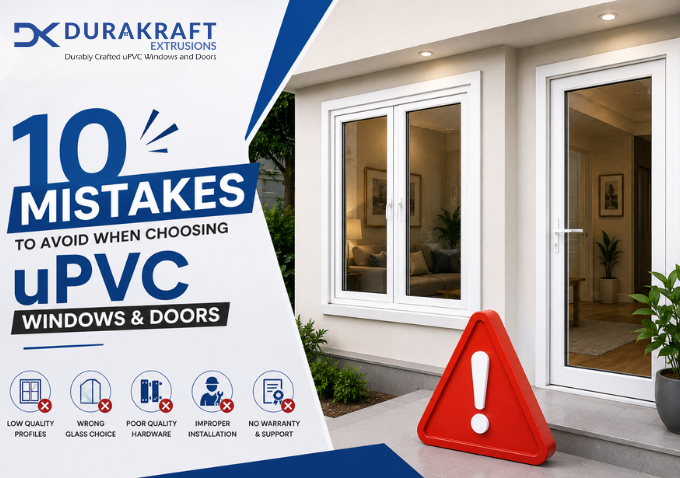
10 Mistakes to Avoid When Choosing uPVC Windows and Doors
uPVC Building Materials: A Complete Guide to Modern Home Solutions
Best uPVC Windows and Doors in India: How to Choose the Right Manufacturer
uPVC Frames Buying Guide: How to Choose the Right uPVC Window and Door Frames
How to Choose the Best uPVC Door and Window for Your Home
How to Choose the Right Sound Resistant uPVC Windows and Frames
Copyright 2025 All Rights Reserved, Durakraft | Site Designed by CITEC