



CUSTOMER COMPLAINTS
We are sorry if we have caused any inconvenience to you. Please fill up the form below with your details. Our customer support staff will make sure we address your issue at the earliest.
Introduction
A door is more than just an entrance to your home. It plays an important role in security, ventilation, insulation, and the overall appearance of a building. Choosing the right door can improve everyday comfort while also reducing maintenance and increasing the value of your property.
Today, many homeowners, architects, and builders prefer uPVC doors because they combine strength, modern design, and long-term performance. Unlike traditional wooden doors that may absorb moisture or require regular polishing, uPVC doors is designed to withstand changing weather conditions with minimal upkeep. It is also resistant to rust, termites, and corrosion, making it a practical solution for homes and commercial buildings across India.
From compact apartments to large villas and office spaces, these door systems are being used in a wide range of projects. Their clean design, smooth operation, and compatibility with different types of glass make them suitable for modern architecture.
This guide explains how these doors are built, the technology behind them, their benefits, and the factors you should consider before choosing one for your project.
Unlike conventional wooden or metal doors, uPVC is a rigid polymer engineered for construction applications. It is designed to remain stable under varying weather conditions without warping, swelling, or rusting.
A complete door is not just a panel. It is a system made up of several components that work together to deliver strength, safety, and smooth operation.
These components include:
The quality of each component directly affects how well the uPVC door performs over time.
A modern uPVC door system is designed to do much more than open and close. It helps protect the interior from dust, rain, outside noise, and temperature changes while providing reliable security.
Every component has a specific purpose.
The profile forms the main structure of the door. Premium profiles are manufactured to provide rigidity while remaining lightweight enough for smooth operation.
Many high-quality profiles include multiple internal chambers. These chambers improve insulation and add structural strength without making the door excessively heavy.
A strong uPVC doors frame supports the entire assembly and ensures proper alignment throughout its life.
A well-designed frame helps:
Even the best door panel cannot perform efficiently without a properly manufactured and installed frame.
Hardware is one of the most overlooked parts of any door.
Components such as hinges, rollers, handles, and locks are used every day, so their quality has a direct impact on durability and user experience.
Reliable hardware should offer:
One of the most popular options in modern homes is uPVC sliding doors. Instead of swinging inward or outward, these doors move horizontally along precision-engineered tracks.
This simple design offers several practical advantages.
Because the panels slide instead of opening into the room, they save valuable floor space. This makes them particularly useful in apartments, balconies, patios, and compact living areas where efficient space planning is important.
Large glass panels also allow more daylight to enter the room while providing wider outdoor views, creating interiors that feel brighter and more open.
Traditional hinged doors require clearance to open.
Sliding doors eliminate this requirement, allowing furniture and décor to be placed closer to the opening without affecting functionality.
For modern homes with limited space, this can make a noticeable difference.
Natural light helps create comfortable and inviting interiors.
Since sliding doors generally include larger glazed sections, they allow sunlight to enter more effectively than many conventional door designs.
Well-lit interiors can also reduce the need for artificial lighting during the daytime.
Modern track systems and quality rollers make opening and closing effortless.
With routine cleaning and occasional maintenance, the mechanism continues to operate smoothly for years.
Sliding doors are available in different sizes, panel configurations, colours, and finishes.
Depending on the project, they can be combined with:
This flexibility allows homeowners to balance privacy, aesthetics, and performance according to their needs.
When comparing different products, many buyers focus only on price or appearance.
However, the long-term performance of a door depends on the quality of its materials.
A premium system is designed to resist:
It should also maintain its shape and functionality even after years of regular use.
Choosing a high-quality product may involve a higher initial investment, but it often reduces maintenance costs and improves reliability over the long term.
Understanding a few technical features can help you compare products more confidently.
Unlike conventional locks that secure the door at a single location, multi-point locking systems engage the frame at several points.
This provides:
Large doors experience greater structural loads.
Steel reinforcement placed inside the profile increases rigidity and helps the system maintain its shape during daily operation.
This feature is especially important for larger openings.
Rubber gaskets and weather seals create a tight barrier between the moving panel and the frame.
Effective sealing helps reduce:
This contributes to a more comfortable indoor environment throughout the year.
Modern door systems are suitable for a wide variety of residential and commercial projects.
They are commonly installed in:
The choice of design depends on the available space, ventilation requirements, privacy needs, and architectural style.
Selecting the right door is about much more than appearance. Material quality, profile design, hardware, locking mechanisms, and installation all influence long-term performance. Understanding these technical aspects helps homeowners and project professionals choose a solution that delivers durability, security, and everyday convenience.
Choosing a door is not only about style—it is also about how well it performs over time. A well-designed system helps improve comfort, security, and energy efficiency while reducing maintenance.
Here are some of the practical benefits you can expect from a high-quality installation.
Doors are one of the main points where heat can enter or escape a building. A poorly fitted door may allow unwanted air leakage, making it harder to maintain a comfortable indoor temperature.
Modern uPVC door systems are designed with multi-chamber profiles, quality weather seals, and precision-engineered fittings that help reduce heat transfer. When combined with double-glazed glass, they provide even better insulation.
Although no door can completely eliminate heat exchange, choosing a well-manufactured system can improve indoor comfort and support energy-efficient buildings.
India experiences diverse climates, from extreme summer temperatures to heavy monsoon rains and humid coastal regions.
A quality door should perform consistently throughout these changing conditions.
Unlike traditional wooden doors that may swell after prolonged exposure to moisture or metal doors that can corrode over time, uPVC maintains its shape and performance with minimal maintenance.
It is designed to resist:
These properties make it suitable for residential and commercial projects in different parts of the country.
Security is one of the most important factors when selecting any entrance or balcony door.
Modern systems include several features that improve protection without affecting convenience.
Some common security features include:
When installed correctly, these features work together to provide better resistance against forced entry while ensuring smooth daily operation.
Different properties have different requirements, so there is no single solution that suits every project.
Here are a few general recommendations.
These are ideal when saving space is a priority.
They work well for:
Large glass panels also create a seamless connection between indoor and outdoor spaces.
Hinged designs are commonly used for:
They provide a traditional opening style while offering excellent stability and secure locking.
The best choice depends on your available space, ventilation needs, privacy requirements, and architectural design.
Before making your decision, take time to evaluate more than just the appearance of the product.
A few important questions can help you compare different options.
A reliable manufacturer should be able to answer these questions clearly and explain the technical specifications of the product.
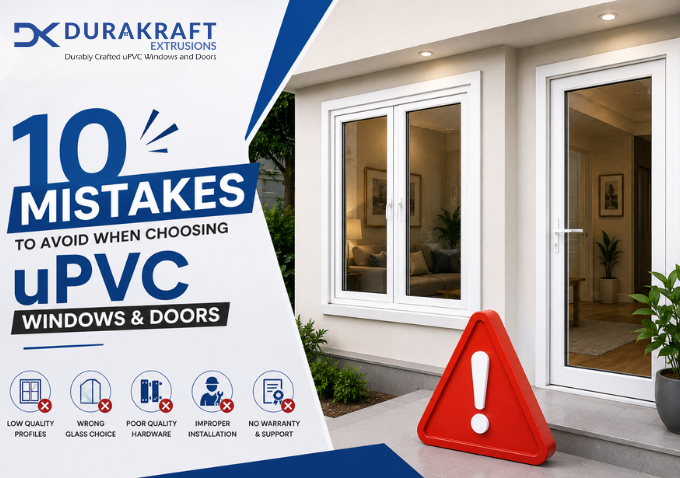
Many buyers unintentionally choose products that do not meet their long-term requirements.
Avoid these common mistakes.
Choosing the lowest-priced option may lead to compromises in profile quality, hardware, or installation.
Instead, compare overall performance, durability, and warranty.
Even a premium product may not perform well if it is installed incorrectly.
Improper alignment can cause:
Professional installation is just as important as the product itself.
Handles, rollers, hinges, and locks are used every day.
Selecting reliable hardware improves durability, safety, and ease of operation over the life of the door.
Glass selection should match the purpose of the space.
For example:
Understanding these options helps you select a solution that meets both functional and design requirements.
One reason homeowners appreciate uPVC doors is that they are easy to maintain.
Following a few simple practices will help keep them performing efficiently.
Routine maintenance takes only a few minutes but helps preserve smooth operation and extends the life of the system.
They are durable, weather-resistant, low-maintenance, termite-resistant, and suitable for residential as well as commercial applications.
2. Are sliding doors suitable for small homes?
Yes. Since they move horizontally instead of swinging open, they save space and are an excellent choice for apartments, balconies, and compact living areas.
3. How long can a quality door system last?
The lifespan depends on the quality of the materials, hardware, installation, and maintenance. With proper care, a well-manufactured system can provide reliable performance for many years.
4. Can these doors help improve energy efficiency?
Yes. Multi-chamber profiles, quality weather seals, and suitable glazing help reduce heat transfer and improve indoor comfort.
5. Do they require regular painting?
No. Unlike wooden doors, uPVC doors does not require painting or polishing. Routine cleaning is generally sufficient.
6. Are they suitable for coastal or humid areas?
Yes. They are designed to resist moisture and corrosion, making them suitable for humid and coastal environments.
7. What type of glass should I choose?
The right choice depends on your needs. Toughened glass is commonly selected for added strength, while double glazing is preferred for insulation and noise reduction.
8. What should I consider before making a purchase?
Evaluate the profile quality, hardware, locking system, glazing options, warranty, installation process, and after-sales support instead of comparing products only by price.
Follow us on Instagram – Durakraft Extrusions
uPVC Windows vs Old Windows: When Should You Upgrade?
Top 10 uPVC Windows and Doors Profile Manufacturers in India
Best Modern uPVC Doors and Window Designs in 2026
uPVC vs Wood Windows and Doors: Why uPVC Is the More Practical Choice for Most Modern Homes
10 Mistakes to Avoid When Choosing uPVC Windows and Doors
uPVC Building Materials: A Complete Guide to Modern Home Solutions
Best uPVC Windows and Doors in India: How to Choose the Right Manufacturer
uPVC Frames Buying Guide: How to Choose the Right uPVC Window and Door Frames
How to Choose the Best uPVC Door and Window for Your Home
How to Choose the Right Sound Resistant uPVC Windows and Frames
Copyright 2025 All Rights Reserved, Durakraft | Site Designed by CITEC