

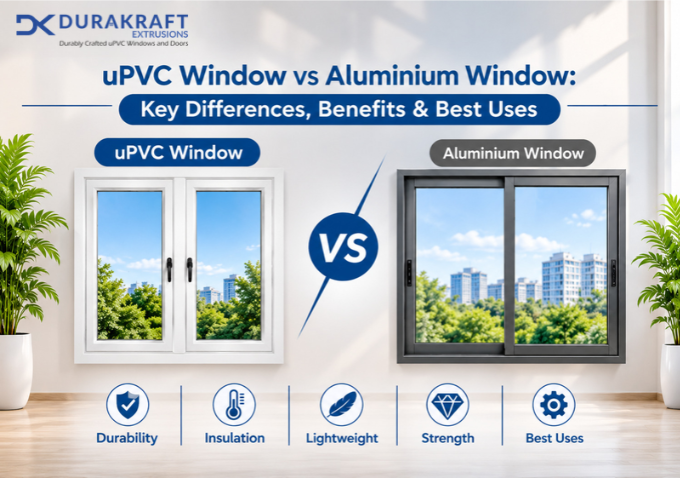
Choosing the right window material is important when building or renovating a home. Windows influence indoor temperature, natural light, ventilation, noise levels, security, and maintenance costs. Two popular choices in modern construction are uPVC and aluminium windows, but each offers different benefits.
If you are comparing uPVC window vs aluminium window, the right choice depends on your budget, building design, weather conditions, insulation requirements, and preferred appearance. This guide explains their key differences to help you make an informed decision.
What Is the Difference Between uPVC and Aluminium Windows?
uPVC windows are made from unplasticised polyvinyl chloride, a rigid material known for thermal insulation, moisture resistance, and low maintenance. Modern uPVC profiles often feature multiple internal chambers that help reduce heat transfer. Reinforcement can also be added where required for structural stability.
Aluminium windows are manufactured using aluminium alloy profiles. They are lightweight, structurally strong, and suitable for slim frames and large glass panels. Thermally broken aluminium systems include an insulating barrier to reduce heat transfer through the frame.
The main difference is that uPVC naturally offers good insulation, while aluminium provides greater structural stiffness and flexibility for contemporary architectural designs.
uPVC Window vs Aluminium Window: Key Differences
| Feature | uPVC Windows | Aluminium Windows |
| Thermal insulation | Naturally good | Improved with thermal breaks |
| Noise reduction | Good with suitable glazing | Good with suitable glazing |
| Structural strength | Depends on profile and reinforcement | High structural stiffness |
| Appearance | Multiple residential designs | Slim frames and larger glass areas |
| Maintenance | Low | Low |
| Weather resistance | Resistant to moisture and rust | Corrosion-resistant with suitable finishes |
| Best applications | Homes and apartments | Commercial buildings and large openings |
Both materials can provide dependable performance when properly manufactured, specified, and installed.
1. Durability and Weather Resistance
Durability is an important factor when investing in new windows. Quality uPVC windows resist rust, rot, moisture, and termites. Their long-term performance depends on material formulation, UV stabilisation, profile construction, hardware, and installation quality.
Aluminium windows offer excellent structural stiffness and can support larger glass panels. Their natural oxide layer helps protect against corrosion, while appropriate surface coatings provide additional protection.
For Indian weather conditions, both materials can be suitable. Choose UV-stabilised uPVC profiles or aluminium windows with appropriate finishes according to your local climate.
2. Thermal Insulation and Energy Efficiency
Thermal insulation is especially important in India, where summer temperatures can be high. Poorly insulated windows can allow unwanted heat to enter indoor spaces.
uPVC has low thermal conductivity, meaning it transfers less heat than standard aluminium. Multi-chamber profiles, effective weather seals, and suitable glazing can help maintain comfortable indoor temperatures and reduce dependence on air conditioning.
Standard aluminium frames conduct heat more readily. However, thermally broken aluminium windows use an insulating barrier between the inner and outer frame sections to improve thermal performance.
For homeowners prioritising indoor comfort and insulation, uPVC is often a practical residential choice.
3. Sound Insulation: Which Window Reduces Outside Noise?
Noise from traffic, construction, and busy neighbourhoods can affect indoor comfort. A well-designed window can help reduce outside noise.
uPVC windows support effective sealing systems, and their multi-chamber construction can contribute to sound insulation. Aluminium windows can also provide good acoustic performance when combined with appropriate glazing and properly fitted seals.
For better noise reduction, consider double-glazed glass, laminated acoustic glass where suitable, quality locking systems, and professional installation. The overall window design matters more than the frame material alone.
4. Maintenance and Long-Term Value
Both uPVC and aluminium windows require relatively little maintenance compared with traditional wooden frames.
uPVC does not rust or require regular painting. Routine care includes cleaning the frames with mild soap and water, removing dust from tracks, and checking hinges, locks, seals, and drainage openings.
Aluminium windows are also easy to maintain. Powder-coated or anodised finishes help protect the surface, although damaged coatings should be inspected and repaired when necessary.
The overall cost depends on profile quality, window dimensions, glass specifications, hardware, finish, and installation. Compare quotations with equivalent specifications and consider long-term performance rather than focusing only on the initial price.
5. Appearance and Design Flexibility
Window design influences the appearance of a building. uPVC windows are available in casement, sliding, tilt-and-turn, and fixed configurations. They are suitable for apartments, independent houses, villas, and renovation projects.
Aluminium windows are popular in contemporary architecture because they support slim frames and larger glass areas. They are often preferred for commercial spaces, modern façades, and projects requiring wide openings.
Choose uPVC for a balance of insulation and residential practicality, or aluminium when your design requires narrow frames and extensive glazing.
Where Should You Use uPVC and Aluminium Windows?
uPVC windows are suitable for:
- Residential apartments and independent houses.
- Bedrooms and living rooms where comfort matters.
- Homes in hot or humid regions.
- Renovation projects with suitable standard openings.
Aluminium windows are suitable for:
- Commercial buildings and offices.
- Large glass openings and contemporary façades.
- Projects requiring slim frames.
- Specialised architectural glazing applications.
Before making a decision, consider window dimensions, wind exposure, glass weight, hardware capacity, and building requirements.
Why Consider Durakraft uPVC Window Profile Systems?
Choosing a reliable profile manufacturer is essential for long-term window performance. Durakraft Extrusions Private Limited manufactures uPVC window and door profile systems for modern Indian architecture.
Its range includes casement, sliding, tilt-and-turn, and vertical sliding window systems. Important features to evaluate include multi-chamber construction, UV stability, reinforcement compatibility, weather sealing, drainage, and fabrication quality.
Durakraft’s Luxuria Series includes DK 60, DK 84, DK 94, and DK 108 profile systems for different casement and sliding applications.
The right profile depends on the window size, glazing requirements, hardware, and project specifications. Explore the Durakraft uPVC window and door profile range to learn more about available solutions.
Final Verdict: uPVC Window vs Aluminium Window
So, which is better: uPVC or aluminium windows?
uPVC windows are often preferred for residential applications because they offer good thermal insulation, moisture resistance, low maintenance, and noise-control potential. Aluminium windows are ideal for projects requiring structural stiffness, slim frames, and larger glass panels.
Neither material is the best choice for every situation. Compare the complete window system, including profiles, glazing, hardware, installation, warranty, and after-sales support, before making your decision.
Frequently Asked Questions (FAQs)
1. Which is better, uPVC or aluminium windows?
uPVC is generally suitable for insulation-focused residential applications, while aluminium is preferred for slim frames and larger glass openings.
2. Which window is better for hot Indian weather?
uPVC generally provides better natural insulation. Thermally broken aluminium is another option for projects requiring improved thermal performance.
3. Are uPVC windows low-maintenance?
Yes. Quality uPVC windows require routine cleaning and occasional inspection of hardware, seals, and drainage.
4. Which window material lasts longer?
Both can offer a long service life when properly manufactured and installed. Durability depends on material quality, climate, maintenance, and installation.
5. Can aluminium windows reduce outside noise?
Yes. Aluminium windows can provide good noise reduction when paired with appropriate glazing, effective seals, and professional installation.
Follow us on Instagram – Durakraft Extrusions